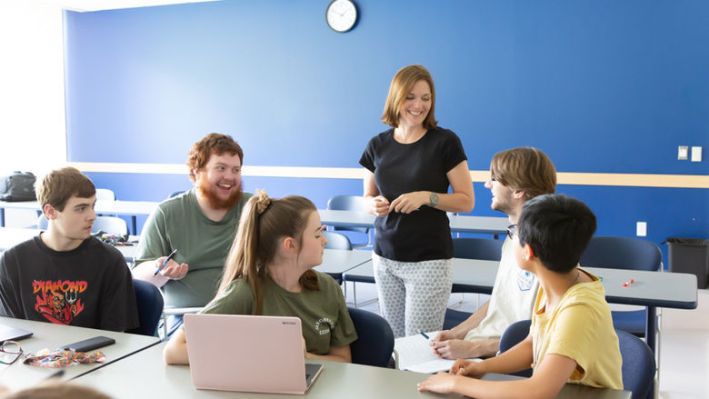
One of the most powerful tools for learning is reflection. It gives students opportunities to think about their thinking and deepen their understanding of how they interact with content. One of the downsides of many reflective practices is that they focus students on themselves. Learning happens in community with other students and teachers. As such, it’s important that students have the opportunity to reflect on their place within the larger learning community.
What reflective practices broaden student perspective from I to We? In the book Teach for Authentic Engagement, author Lauren Porosoff shares the following guided reflections to help students build a community of reflection (pp. 180-187):
- Appreciate our learning. Ask students questions that help them notice what they have learned about the content, themselves, and as a community. Suggested questions include: what are some things you learned how to do?; what are some things you learned about yourself?; and, what are some things you learned about this learning community?
- Appreciating our actions. Ask students questions that help them notice their engagement in the learning process. Suggested questions include: what are some other opportunities for you to do things you enjoyed and did well?; who in this room could practice some of those things you didn’t do well in order to improve?; and, how could the skills you used benefit others in your learning community?
- Appreciating classmates’ contributions. Ask students questions that help them notice the engagement of others throughout the learning process. Suggested questions include: which classmates seem to understand these topics especially well?; which classmates helped you understand these topics?; which classmates demonstrated high levels of skill?; which classmates helped you improve your skills?; which classmates’ products were especially good?; and, which classmates helped you create or refine your product?
As you prepare for next week, think of ways that you might incorporate these community-based reflective practices. You and your students will be glad you did!
 Phil Harrison Coaching